Every year brings a new cat gadget. Some change how we live with cats; most end up in a drawer. That’s the honest truth after a decade of watching shelves fill up with blinking feeders and self-cleaning boxes that jam on the third day. So when I sat down to map the cat care trends to watch in 2026, I applied one filter: does this solve a real problem for the average household, or does it just look good in a launch video?
Four trends passed the test. They’re not the loudest ones. They’re the ones I keep hearing about from behavior colleagues, shelter vets, and the clients who message me at 11pm because their cat stopped using the litter box. Here’s what’s actually shifting, and what it means for you.
What Makes a Cat Care Trend Worth Your Attention
A trend earns a place on this list when three things line up. First, it addresses a behavior or health issue that owners already struggle with, not a problem invented by a marketing department. Second, it has some evidence behind it, even if that evidence is still young. Third, it’s becoming affordable enough that it isn’t just for people with disposable income to burn.
Plenty of 2026 predictions fail one of those tests. Smart collars that track every twitch are interesting, but most owners I know check the app for a week and then forget it exists. Meanwhile, something as unglamorous as better litter substrate quietly changes a cat’s daily life more than any wearable. That gap between what gets headlines and what gets results is where this article lives.
At-Home Health Tech That Catches Problems Earlier
Cats are masters at hiding illness. By the time an owner notices weight loss or lethargy, a thyroid issue or kidney problem has often been developing for months. That’s the problem at-home health monitoring is finally starting to solve in a practical way.
The most useful developments aren’t the flashy ones. They’re the quiet ones: litter boxes that weigh output and flag sudden changes, water fountains that log how much a cat actually drinks, and simple scales built into resting spots. None of these replace a vet. What they do is create a baseline, so when something drifts, you have data instead of a vague feeling that Fluffy seems off.
I’m cautious here, and you should be too. Consumer health devices for pets are lightly regulated, and a lot of them generate anxiety rather than insight. A cat who drinks more in summer isn’t necessarily sick. But when a fountain log shows a steady increase over three weeks, that’s worth a vet call. Used that way, the technology earns its place.
The practical takeaway for 2026: pick one metric you can actually track consistently. Weight is the easiest and one of the most revealing. A cheap baby scale and a weekly weigh-in will tell you more than a subscription service you stop checking in February.
Sustainable Litter Moves From Niche to Normal
Litter is the least glamorous purchase in cat ownership and the one you make most often. That’s exactly why changes here matter. The shift toward plant-based and lower-impact litters has been building for years, and in 2026 it’s crossing into mainstream availability and reasonable pricing.
What’s driving it isn’t just environmental guilt. Clay mining is energy-intensive, clumping clay is heavy to ship, and a growing number of municipalities have opinions about what goes down drains and into landfills. Meanwhile, options made from wheat, corn, walnut shells, tofu byproduct, and recycled paper have improved dramatically. Early versions tracked poorly and smelled worse. The current generation clumps tighter and controls odor well enough that most cats accept them without protest.
Here’s the catch I keep repeating to clients: cats are conservative about their bathroom. A sudden switch can trigger avoidance, and litter box avoidance is one of the top reasons cats end up in shelters. If you want to try a sustainable litter, transition gradually. Mix a small amount into the old litter and increase the ratio over a couple of weeks. Keep the box in the same spot. Don’t change litter and box location in the same month.
Also worth watching is the rise of reusable and washable options for households with one or two cats. They’re not for everyone, and they demand more cleaning discipline, but they cut recurring costs and waste significantly. For the right household, that’s a genuine improvement rather than a green badge.
Enrichment-First Design Reshapes the Home
This is the trend I’m most excited about, because it costs almost nothing and fixes problems people have accepted as normal for decades.
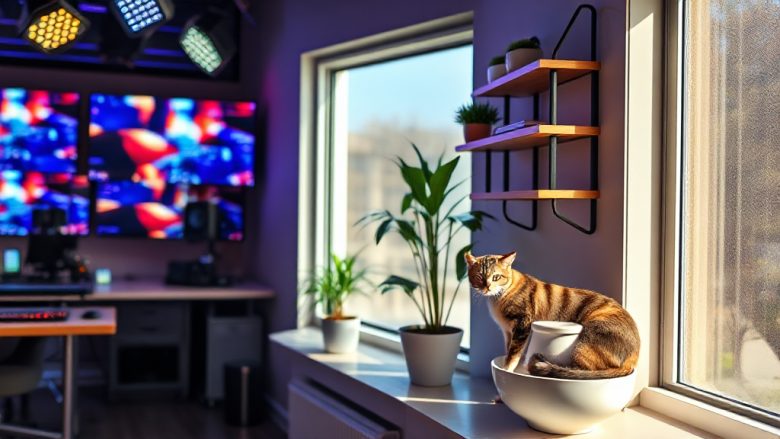
For years, cat furniture meant one thing: a carpeted tower in the corner. In 2026, the thinking has shifted toward designing the whole home around a cat’s natural behavior. That means vertical routes along walls, shelves positioned as stepping stones, window perches at the right height, and scratching surfaces placed where the cat already wants to scratch rather than where they’re convenient for us.
The behavior logic is simple. Cats need to climb, scratch, hide, and watch from a safe vantage point. When those needs go unmet, you get shredded sofa corners, midnight sprinting, and a cat who hides under the bed whenever guests arrive. Enrichment-first design treats those as design failures, not personality flaws.
What’s changed is that the products have caught up with the philosophy. Modular wall-mounted systems, tension-mounted shelves that don’t require drilling, and furniture with replaceable scratching panels are now widely available and reasonably priced. You don’t need to renovate. You need to notice where your cat already spends time and give them a better version of it.
Start small. Add one shelf near a window. Move a scratching post next to the spot your cat already attacks. Put a covered bed in the corner where they retreat. Small changes in the right places outperform a complete overhaul in the wrong ones.
Personalized Nutrition Gets More Accessible
Customized cat food used to mean ordering from a boutique brand at boutique prices. In 2026, the concept has broadened, and the useful part isn’t the marketing. It’s the shift toward feeding cats according to life stage, body condition, and specific health needs rather than a single bag for every cat in the house.
The evidence base here is solid on a few points. Cats are obligate carnivores with specific needs around protein, taurine, and moisture. Wet food helps with hydration, which matters enormously for urinary and kidney health. Portion control matters more than most owners realize, because a cat who is one kilogram overweight faces real risks. These aren’t trends. They’re basics that personalized feeding plans make easier to follow.
What I’d watch with a skeptical eye is any service promising to optimize your cat’s diet based on vague wellness language. Ask what the plan is based on. A good one accounts for your cat’s age, weight, activity, and any diagnosed conditions, and it’s built by someone with nutrition credentials. A bad one is a quiz that sells you expensive kibble in a nicer bag.
The practical shift for most households is simpler than a subscription. Weigh your cat’s food instead of scooping by eye. Add more wet food. Adjust portions as your cat ages. Those three habits deliver most of the benefit that personalized nutrition promises.
How to Tell a Real Shift From a Passing Fad
New products will keep arriving, and some of them will be genuinely good. Here’s the filter I use, and you’re welcome to borrow it.
Ask what problem it solves and whether that problem is real for your cat. Ask whether the benefit is measurable, or at least observable. A fountain that logs water intake gives you something to compare week to week. A toy that promises to reduce anxiety usually doesn’t. Ask what happens if it breaks, because a device your cat depends on becomes a problem when it fails. And ask whether it adds work to your day or removes it. The best cat care tools reduce effort, not add it.
Finally, be suspicious of anything that promises to fix behavior without addressing the environment. Most behavior problems in cats trace back to litter box setup, resources, stress, or pain. No gadget replaces clean boxes, enough water sources, scratching outlets, and a vet visit when something changes. The 2026 trends worth adopting all point back to those fundamentals. The rest is noise, and your cat won’t miss it.