Your first adventure trip is exciting—and that’s exactly why you’ll forget something important. This checklist keeps the big stuff from slipping. I’ve watched grown adults arrive at a trailhead without a headlamp, board a liveaboard with no seasickness tablets, and reach a mountain hut with a passport tucked in a bag that was last seen on a bus. None of them were careless people. They were just excited. Excitement crowds out the boring details, and the boring details are the ones that ruin trips.
So here’s the deal. This adventure travel checklist for first timers is built around the things that actually go wrong, not the things that look good in a packing video. Work through it in order, tick things off as you go, and you’ll arrive at your destination prepared rather than hopeful. The whole thing takes about two hours spread across a few weeks, and it will save you days of grief.
Documents and Insurance: The Boring Stuff That Saves You
Start here, because everything else depends on it. Check your passport expiry date against the rules of your destination. Many countries require six months of validity beyond your return date, and some require blank pages for stamps. If you need a visa, apply early—adventure destinations are often the ones with slower processing and stricter paperwork. Print a paper copy of your passport, visa, and travel insurance policy, and keep a digital copy somewhere you can reach without internet. A photo of your passport on your phone is better than nothing, but a printed copy in a dry bag has rescued more travelers than any app.
Travel insurance is not optional on an adventure trip. Standard policies often exclude hiking above a certain altitude, scuba diving, white-water rafting, and anything involving a motorcycle. Read the exclusions before you buy, not after you break an ankle. If your trip involves any of those activities, look for a policy that explicitly covers them, and check whether evacuation and repatriation are included. That last part matters more than the price. A helicopter ride off a mountain costs more than most people earn in a year.
Also worth doing: register your trip with your home country’s travel advisory service if one exists, and leave a copy of your itinerary with someone who will actually notice if you go quiet. Give them your insurance policy number too. It’s a small thing that makes a big difference if something goes sideways.
Health and Fitness Prep Before You Go
Adventure travel asks more of your body than a beach holiday, and the time to find that out is not on day one of a trek. If your trip involves altitude, start paying attention to your fitness at least eight weeks out. You don’t need to become an athlete. You need to be able to walk uphill for a few hours with a pack and still enjoy your dinner. Long walks with a loaded backpack are the single most useful training you can do, and they also break in your boots.
Visit a travel clinic or your doctor well before departure. Some vaccinations need weeks to take effect, and some destinations require proof of yellow fever or malaria prophylaxis. If you take prescription medication, bring more than you need, in original packaging, with a copy of the prescription. Carry it in your hand luggage, not your checked bag. Altitude sickness medication is worth discussing with a doctor if your itinerary goes above 2,500 metres, and so is a basic course of antibiotics for stomach trouble.
Don’t forget the small stuff. Blister plasters, rehydration sachets, painkillers, antihistamines, and a decent insect repellent. A first-timer’s medical kit should be small but specific: treat the problems you’re likely to get, not every possible emergency. If you wear glasses, bring a spare pair. If you wear contact lenses, bring glasses as backup. You cannot put a lens back in with dusty hands halfway up a mountain.
Gear Essentials: What Actually Earns Its Place
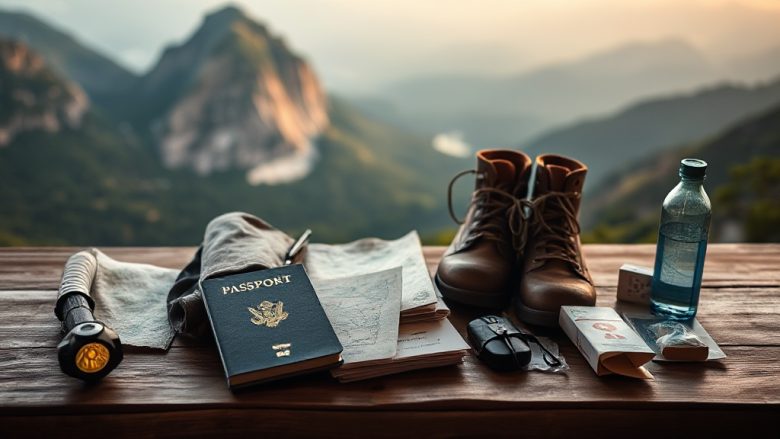
Gear is where first timers overspend and under-prepare at the same time. You don’t need the most expensive kit. You need the right kit, broken in and tested. The core list is shorter than the internet suggests: broken-in footwear, a waterproof shell, insulating layers, a warm hat and gloves, a headlamp with spare batteries, a water bottle or bladder, a small first-aid kit, sun protection, and a daypack that fits properly. Everything else is destination-specific.
Test everything before you leave. Wear your boots on real walks. Sleep in your sleeping bag if you’re camping. Put your pack on and walk for an hour. New gear on a trip is a gamble, and the odds aren’t in your favour. If you’re borrowing equipment, check it works before you’re relying on it in the dark.
Pack for the climate you’ll actually get, not the one in the brochure. Mountain weather changes fast, deserts get cold at night, and tropical rain is not a drizzle. A waterproof dry bag for electronics and documents costs very little and has saved more phones than any case. And bring less clothing than you think. Two technical shirts and one warm layer will out-perform a suitcase of cotton every time.
Booking and Logistics: Getting There Is Half the Battle
Book the parts that matter early and leave the rest flexible. Transport into remote areas, permits, guided activities, and accommodation in peak season all sell out. If your trip involves a trekking permit, a national park reservation, or a ferry that runs twice a week, lock those in first and build the rest of your itinerary around them. Read the cancellation terms carefully. Adventure operators often have stricter policies than hotels because they’ve already paid for guides and permits.
Think about how you’ll get from the airport to your first night’s accommodation. Arriving jet-lagged in an unfamiliar place with no plan is how people end up overpaying or getting scammed. Know the rough cost of a legitimate taxi or transfer before you land. Have some local currency or a card that works, and don’t rely on finding an ATM at midnight.
Check the practical details that catch people out: baggage allowances on small regional flights, weight limits on domestic hops, whether your accommodation has secure storage for luggage while you trek, and whether you need a printed booking confirmation because there’s no signal at the gate. Save offline maps for the areas you’ll be travelling through. They weigh nothing and work when everything else doesn’t.
Safety and Communication on the Move
Tell someone your plan, and update them when it changes. This is the single most effective safety measure available to you, and it costs nothing. Share your route, your expected check-in times, and what to do if you miss one. If you’re going somewhere genuinely remote, consider a satellite messenger or personal locator beacon. They’re not cheap, but they work where phones don’t, and rental options exist in many adventure hubs.
Carry more water than you think you need, and know where the next reliable source is. Learn the local emergency number on day one. Keep a small amount of cash separate from your main wallet, and keep your phone charged with a power bank. If you’re travelling solo, be honest about your limits. Turning back is not failure. It’s the skill that keeps experienced adventurers coming home.
Respect local advice. If a guide says the river is too high or the pass is closed, believe them. They’ve seen what happens when people don’t. And keep your documents, medication, and a warm layer in your daypack, not in the bag that goes in the hold or on the roof of a bus.
Final Pre-Departure Check
Run this the night before you leave. Passport, visa, insurance, and printed copies—check. Medication in hand luggage with prescriptions—check. Tickets, bookings, and offline maps saved—check. Gear tested and packed, with footwear accessible rather than buried—check. Someone at home has your itinerary and check-in schedule—check. Phone charged, power bank charged, adaptor packed—check. Cash and a working card—check. Weather forecast looked at, and a plan for if it turns—check.
Then stop. The list is done. The rest is just showing up and paying attention. First adventure trips are supposed to feel a little uncertain; that’s part of why they matter. The checklist isn’t there to remove the unknown. It’s there to make sure the unknown is the mountain, the river, or the desert—not your missing insurance policy.
Frequently Asked Questions
How far in advance should I start preparing for my first adventure trip?
Start with documents and insurance about three months out, especially if visas or vaccinations are involved. Begin fitness training and gear testing eight weeks before departure. The final logistics and packing check can happen in the last week.
Do I really need travel insurance for hiking and adventure activities?
Yes. Medical evacuation from a remote area is extremely expensive, and many standard policies exclude adventure activities. Buy a policy that explicitly covers the activities on your itinerary, including altitude, water, or motorized sports if relevant.
What is the most commonly forgotten item on a first adventure trip?
A headlamp with working batteries. It’s small, easy to overlook, and genuinely difficult to improvise when it gets dark earlier than expected. Blister treatment and a spare pair of glasses are close runners-up.